Category: Uncategorized

  • Why the ChatGPT desktop app isn’t just “the web in a window” — and how to choose the right setup for macOS or Windows

    A common misconception: installing the ChatGPT desktop app is only about convenience — that it simply wraps the web interface in a native shell and nothing meaningful changes. That idea is half right and half misleading. Yes, the desktop app provides the same conversational AI at its core, but the mechanics of a native app — keyboard hooks, file access, local UI affordances, companion windows, and optional voice input — change how the assistant integrates with a working day. Those differences matter for real productivity decisions: they affect interruption cost, workflow continuity, data boundaries, and how you can use the assistant for coding, document work, and fast reference.

    In the US workplace context, where people juggle email, IDEs, spreadsheets, and frequent context switches, the choice between web-only, a macOS app, or a Windows app comes down to three practical axes: access latency (how fast you can ask a question), fidelity of integration (what the app can reach or attach to), and account/administration constraints (what your plan or org allows). This article explains the mechanisms behind those axes, compares trade-offs for mac and Windows users, clarifies where the desktop app genuinely helps and where it doesn’t, and gives a short decision framework you can reuse.

    Icon representing an AI assistant; implies desktop integration and fast access for document and coding workflows

    How the desktop app changes the mechanism of assistance

    Think of the ChatGPT service as a remote thinking engine. The “web” and “desktop” surfaces are different adapters to that engine. The web adapter runs inside a browser tab; the desktop adapter is a native program that can register global keyboard shortcuts, manage a compact companion window, and sometimes expose richer drag-and-drop or screenshot capture flows. Mechanically, this matters in three ways:

    – Fast keyboard access: the desktop app can install system-level keyboard triggers that open a small query overlay without switching away from the active window. That reduces context switching latency — the time and cognitive cost to pause work, frame a question, and return. For short problem-solving loops (e.g., “How to replace this CSS selector?”), lower latency increases the likelihood you’ll use the assistant and finish faster.

    – File and image handoff: native apps can accept drag-and-drop, read local files that you point to in a conversation, or capture screenshots for immediate annotation. For code reviews, quick bug reports, or summarizing a long PDF, the difference between copying text into the web UI and dropping a file into the app is meaningful; it lowers friction and preserves surrounding context (file names, line numbers) that improve the assistant’s answers.

    – Companion window and multitasking: a small always-on-top companion window allows side-by-side workflows (notes, a TODO list, or a coding console) without a full context switch. That changes not only convenience but cognitive flow: you can iteratively refine prompts while keeping your main workspace visible, which is often how expert users reason through complex problems.

    Platform-specific trade-offs: macOS vs Windows

    Both platforms offer desktop experiences, but the user-level trade-offs differ because of platform norms and OS-level capabilities.

    macOS strengths: mac users usually value tight keyboard-driven workflows, and the OS provides mature system-wide shortcut hooks and screenshot APIs. The ChatGPT app on macOS typically integrates cleanly with these features, offering rapid invocation and robust screenshot sharing. If your work is heavy on text, code, or short iterative queries, a macOS setup often feels faster and more “invisible” in the flow.

    Windows strengths: Windows is dominant in many enterprise environments and commonly hosts heavier local tooling (legacy apps, complex IDEs, virtual desktops). The Windows desktop app tends to emphasize compatibility with a larger set of enterprise configurations and may expose different system integrations like broader file dialog behaviors or different hotkey semantics. If you’re working in a Windows-dominant admin or corporate environment, the desktop app’s ability to sit alongside specialized enterprise software without browser profile conflicts can be a real productivity win.

    Shared limitations: across both OSes, features like voice interaction, multimodal file input, and advanced connectors depend on your account plan, device hardware, region, and app version. That means two users on the same machine might have different capabilities if their subscriptions or organizational settings differ. Also, while native apps can request more convenient access to local files, they do not change where processing happens: the core model remains a cloud service under the ChatGPT umbrella, so any privacy, latency, or availability constraints tied to the cloud still apply.

    Where the desktop app helps most — and where it won’t

    High-value scenarios for the desktop app:

    – Fast, iterative coding assistance. The ability to paste or attach code files, keep an assistant window open beside your IDE, and quickly invoke the assistant reduces the edit-test-debug cycle. It’s not magic: ChatGPT remains a suggestion engine, but lowering friction increases throughput.

    – Active document work. When drafting, editing, or summarizing long documents, dragging a file or screenshot into a native window keeps metadata intact and often produces cleaner, context-aware responses.

    – Quick reference and micro-tasks. If you frequently need definitions, example snippets, or short checklists, the speed of a companion window or keyboard trigger materially reduces interruption costs.

    Where its value is limited:

    – Deep offline work. Because the model processing is cloud-based, the desktop app doesn’t replace the need for internet connectivity. If you need offline or air-gapped AI capabilities, the desktop app will not deliver them.

    – Absolute privacy assurance. Native apps can simplify file transfer to the service, but they don’t alter the upstream data processing rules of the provider; account settings and organizational policies determine retention and use. For highly sensitive material, you still need to evaluate policy, redaction, or on-prem alternatives.

    Decision framework: a quick checklist to choose the right setup

    Answer these questions to decide whether to install the desktop app on macOS or Windows:

    1) Do you need ultra-low friction for short queries? If yes, desktop app likely helps (keyboard trigger, companion window).

    2) Do you frequently attach files, screenshots, or code? If yes, desktop app reduces friction.

    3) Is your organization restrictive about software installation or data connectors? If yes, check admin policies first — account-dependent features can limit the app’s full potential.

    4) Are you often offline or dealing with classified/sensitive data? If yes, the desktop app is not a substitute for local processing or strict data controls.

    If your answers tilt toward “yes” for 1–2 and “no” for 3–4, installing the app will likely save time. If not, the web interface may be sufficient and avoids installing additional software.

    Practical installation and safety guidance

    When you decide to install, follow safe-download practices: use official OpenAI channels or trusted app stores rather than third-party installers. For convenience, the official distribution pages and reputable stores route updates and security patches through the right channels. If you prefer a direct desktop link for convenience, you can find the official desktop download from this reputable aggregator: chatgpt desktop app. Always verify OS prompts and permissions during install, and consider limiting file permissions if you handle sensitive material.

    Also, configure keyboard shortcuts and companion-window behavior to match your working style. Too many global shortcuts create accidental interruptions; too few and you lose the point. Start with a single, comfortable shortcut and widen adoption only if it truly speeds tasks.

    One conceptual deepening: interruption cost and cognitive flow

    Productivity gains here are mostly about reducing interruption cost — the time it takes to reconstruct context after a switch. The desktop app reduces two components of that cost: (a) physical switching time (clicks, window switching), and (b) the mental framing cost (retyping context, re-explaining a snippet). The former is measurable in seconds; the latter is where the assistant often pays dividends. But this mechanism has limits: if you use the assistant for complex, strategic thinking, the presence of a fast-access tool can encourage superficial fixes rather than sustained design work. In other words, the desktop app optimizes quick problem-resolution but does not replace deep, uninterrupted concentration for high-cognitive tasks.

    What to watch next — conditional signals and near-term implications

    Monitor three signals that will change the desktop app’s practical utility:

    – Account feature differentiation: if providers increasingly gate advanced tools (code execution, external connectors) behind higher tiers or enterprise controls, the raw utility of a free or entry-level desktop install may narrow.

    – Local integration APIs: any increase in OS-level APIs permitting safer local inference or hybrid models would reduce dependency on cloud-hosted processing, changing privacy and latency trade-offs.

    – Voice and multimodal maturity: broader, reliable voice and image understanding in the desktop app will shift usage patterns from typed micro-queries to conversational, hands-free workflows. But this depends on device hardware, regional support, and account permissions, so adoption will be staggered.

    FAQ

    Do I need the desktop app to use ChatGPT features like file uploads and voice?

    No. Many features are accessible via the web interface, but the desktop app reduces friction for tasks that require quick file sharing, screenshots, or keyboard triggers. Voice functionality and some advanced tools may depend on your plan, device, region, and app version rather than solely on the desktop install.

    Is the desktop app safer than using ChatGPT in a browser?

    “Safer” depends on what you mean. The desktop app can make file transfer easier, but it doesn’t change the cloud-based nature of model processing or the provider’s data handling policies. For sensitive data, organizational policies and account settings are the decisive factors. Use admin controls, redaction, or local processing alternatives when needed.

    Will the desktop app make me more productive by itself?

    Not automatically. It reduces friction for specific micro-tasks and lowers interruption cost, which increases the frequency and speed of assistant-assisted work. But productivity gains depend on how you integrate the tool into deliberate workflows; poor prompt hygiene or overreliance for deep thinking can negate benefits.

    Which should I install: macOS or Windows version?

    Install the version that matches your daily environment. macOS often offers tighter keyboard and screenshot flows that benefit iterative text and code work; Windows can be better in enterprise settings with legacy applications. If you switch devices frequently, prioritize cross-device continuity through your account settings so conversations and memories sync across web and desktop.

    Choosing to add a native ChatGPT client to your toolbox is a judgment about friction, context, and control. For many US-based knowledge workers, the desktop app meaningfully lowers the cost of using an AI assistant during day-to-day tasks — but it is not a one-size-fits-all upgrade. Treat it as a workflow instrument: test it against the three axes above, monitor how it changes your interruption patterns, and tune permissions and shortcuts to fit deliberate, high-value work rather than constant low-level noise.
  • Cómo los programas de lealtad impulsan la protección familiar en los casinos online en Año Nuevo

    El crecimiento explosivo de los casinos online del mundo ha convertido al iGaming en una actividad de masas, accesible desde cualquier smartphone o PC. Esta expansión trae consigo un doble filo: por un lado, la posibilidad de disfrutar de slots con alta volatilidad, mesas de blackjack con RTP del 99 % y torneos de póker con jackpots millonarios; por otro, la preocupación creciente de padres, tutores y reguladores por el bienestar de los jugadores y el impacto en sus hogares. La temporada de Año Nuevo, con sus bonos de bienvenida, giros gratis y promociones de “juega y gana”, representa uno de los periodos de mayor actividad, cuando la tentación de apostar con dinero real se intensifica.

    En este contexto, la responsabilidad social de la industria no es opcional. Los operadores que integran la protección familiar dentro de sus estructuras de fidelización demuestran que es posible combinar diversión y seguridad. Un recurso útil para explorar ejemplos de buenas prácticas es el sitio mejores casinos online, que ofrece información general sin promocionar directamente a ningún operador.

    Este artículo presenta un caso de éxito concreto: cómo un programa de lealtad bien diseñado ha ayudado a familias españolas a jugar de forma saludable durante la agitada época festiva. Analizaremos su arquitectura, la comunicación estacional, los resultados cuantitativos y los aprendizajes que cualquier casino online fiable puede aplicar para el próximo Año Nuevo.

    1. Diseño de un programa de lealtad con foco en la salud familiar

    Un programa de lealtad responsable parte de principios claros: la recompensa debe incentivar comportamientos seguros, no solo el gasto. En la práctica, esto significa transformar métricas de juego responsable –tiempo de sesión, número de apuestas por hora, límites de depósito y auto‑exclusión– en “puntos de bienestar”. Cada vez que un jugador activa un límite de 500 €, recibe 50 puntos extra que pueden canjearse por giros gratuitos en slots de baja volatilidad, como Starburst o Book of Dead.

    Métrica tradicional Métrica responsable (puntos)
    € depositado € depositado + límite activado
    Nº de apuestas Nº de apuestas + sesión < 2 h
    Jackpot alcanzado Jackpot alcanzado + uso de herramienta de auto‑exclusión

    Esta gamificación de los límites evita la sensación de “castigo”. En lugar de perder acceso, el jugador gana oportunidades de juego con menor riesgo. Además, los niveles de recompensa pueden incluir asesoramiento personalizado: al alcanzar el nivel “Familia Segura”, el usuario recibe una sesión gratuita con un coach de juego responsable que explica cómo usar herramientas de control de volatilidad en juegos como Roulette o Blackjack.

    Comparado con programas tradicionales que solo premian el volumen de apuestas, el enfoque responsable reduce la presión de seguir apostando para subir de nivel. En los casinos que solo ofrecen bonos de 100 % hasta €200, el jugador suele buscar constantemente el próximo depósito. En cambio, cuando los puntos se otorgan por acciones protectoras, la motivación se desplaza hacia la autogestión, creando una experiencia más equilibrada y sostenible.

    2. Comunicación eficaz de los beneficios responsables en la campaña de Año Nuevo

    La campaña estacional debe hablar directamente a la “promesa familiar”. Un mensaje típico en newsletters podría ser: “Este Año Nuevo, protege a los tuyos mientras disfrutas de 20 % de bonos extra por cada límite que establezcas”. El uso de iconografía familiar –silhuetas de padres e hijos, relojes que marcan la cuenta atrás– refuerza la idea de que el juego es una actividad compartida y controlada.

    Los canales más efectivos son:

    • Email: envío de tres correos durante la semana previa al 31 de diciembre, con asunto que incluya palabras como “seguro”, “familia” y “Año Nuevo”.
    • Banners: ubicación en la página de inicio y en la sección de promociones, con colores cálidos y un botón “Configura tu límite ahora”.
    • Redes sociales: videos cortos de testimonios reales donde padres explican cómo el programa les ayudó a evitar discusiones por apuestas impulsivas.

    Un cronograma ejemplo:

    1. 7 días antes: anuncio del “Reto Familiar” con incentivo de 30 % de puntos extra.
    2. 3 días antes: recordatorio de los límites y enlace directo al portal de configuración.
    3. Día de Año Nuevo: mensaje de feliz año con “última oportunidad” para obtener bonificaciones por límites.

    Métricas de seguimiento incluyen la tasa de apertura (objetivo > 25 %), clics al portal de límites (≥ 12 %) y aumento del número de usuarios que activan al menos un límite familiar (meta del 15 %). Estos indicadores permiten ajustar el mensaje en tiempo real y garantizar que la campaña no solo sea vistosa, sino también eficaz.

    3. Caso de estudio: “Club Familia” de un casino líder en España

    El casino “SolBet”, uno de los top casinos online en el mercado español, lanzó en 2023 su programa “Club Familia”. El objetivo era combinar la fidelización típica –bonos de bienvenida, cashback y torneos – con un componente de protección familiar.

    Resultados cuantitativos

    • Reducción del 22 % en sesiones que superaron las 3 h de juego continuo durante diciembre‑enero.
    • Incremento del 15 % en usuarios que establecieron límites de depósito mensual para sus cuentas vinculadas a menores.
    • Aumento del 8 % en la retención de jugadores que participaron en el programa, medido a los 12 meses.

    Historias breves

    1. Los García – La madre, Ana, limitó el depósito de su hijo de 16 años a €50 al mes. Cada mes recibió 20 puntos extra que canjearon por giros en Gonzo’s Quest, lo que mantuvo al joven entretenido sin superar su presupuesto.
    2. Familia López – Después de recibir un mensaje de alerta por una sesión de 4 h, el padre activó la auto‑exclusión de 7 días. Como recompensa, obtuvo una apuesta sin riesgo de €10 en Mega Joker, lo que reforzó su decisión de tomarse un descanso.
    3. Los Pérez – La pareja estableció un límite conjunto de €300 para la noche de Año Nuevo. Al cumplirlo, ganaron 100 puntos que se tradujeron en un torneo de slots con premio de €500, disfrutando del juego sin exceder su presupuesto.

    Lecciones aprendidas

    • La retroalimentación directa de los usuarios mostró que los puntos por límites son más motivadores que los bonos tradicionales.
    • Integrar un “coach de juego responsable” en la app aumentó la percepción de apoyo y redujo la tasa de abandono del programa.
    • Después del primer año, se ajustó la escala de puntos para premiar también la frecuencia de revisiones de límites, no solo su establecimiento inicial.

    4. Impacto en la percepción de marca y fidelización a largo plazo

    La responsabilidad responsable se ha convertido en un diferenciador clave. Cuando los jugadores perciben que un casino cuida de su familia, la confianza se traduce en lealtad duradera. En el caso de SolBet, los usuarios que participaron en “Club Familia” mostraron un 30 % más de probabilidad de volver después de 12 meses en comparación con los que solo recibieron bonos tradicionales.

    Las certificaciones externas, como el sello “Juego Seguro” de la Dirección General de Ordenación del Juego, y premios de la industria a la innovación en responsabilidad, refuerzan la reputación. Un estudio interno (no divulgado públicamente) reveló que la presencia de estos sellos en la página de inicio incrementó la tasa de registro en un 9 %.

    Para medir el ROI de la inversión en protección familiar, se recomienda:

    • Calcular el coste de los puntos otorgados versus el valor del jugador a largo plazo (LTV).
    • Analizar la reducción de costes de atención al cliente relacionados con problemas de juego problemático.
    • Evaluar el impacto en la adquisición de nuevos usuarios a través de referencias familiares.

    Estos indicadores demuestran que la protección familiar no solo es una obligación ética, sino también una estrategia rentable que fortalece la marca en un mercado competitivo de casinos online fiables.

    5. Pasos prácticos para que otros operadores reproduzcan este éxito en el próximo Año Nuevo

    Checklist de 10 acciones

    1. Realizar auditoría de riesgos centrada en patrones de juego familiar.
    2. Definir métricas de juego responsable que se convertirán en puntos.
    3. Diseñar niveles de recompensa que incluyan beneficios por límites y auto‑exclusión.
    4. Integrar un módulo de coaching de juego responsable en la plataforma.
    5. Crear materiales visuales con enfoque familiar (iconos, colores cálidos).
    6. Programar una campaña de email con tres envíos previos a Año Nuevo.
    7. Publicar banners y videos testimoniales en redes sociales.
    8. Implementar un panel de control de límites fácil de usar en móvil y desktop.
    9. Establecer KPIs: tasa de apertura, clics al portal de límites, % de usuarios con límites activos.
    10. Revisar resultados trimestralmente y ajustar la escala de puntos.

    Herramientas recomendadas

    • RiskGuard: solución de gestión de límites y auto‑exclusión con API para integrar puntos.
    • LoyaltyEngine: plataforma de gamificación que permite convertir acciones responsables en recompensas.

    Plantilla de comunicación de lanzamiento

    Asunto: “Este Año Nuevo, protege a tu familia y gana 20 % de puntos extra”

    Cuerpo:
    – Introducción breve sobre la importancia de jugar de forma segura.
    – Explicación de cómo cada límite activo genera puntos.
    – Enlace directo al “Centro de Límites Familiares”.
    – Testimonio real de una familia que ya lo está usando.
    – CTA: “Configura tu límite ahora y recibe tu bono de bienvenida”.

    KPIs para los primeros tres meses

    • % de usuarios que establecen al menos un límite (objetivo 25 %).
    • Número de puntos generados por acciones responsables (meta 50 000).
    • Reducción de sesiones > 3 h (meta 15 %).
    • Incremento del NPS (Net Promoter Score) en un 5 % respecto al periodo anterior.

    Conclusión

    Los programas de lealtad pueden ser la piedra angular de una estrategia de juego responsable que protege a las familias, especialmente en periodos de alta actividad como el Año Nuevo. Al convertir límites, auto‑exclusiones y revisiones de depósito en recompensas tangibles, los operadores no solo reducen el riesgo de juego problemático, sino que también fortalecen la confianza y la fidelidad de sus clientes.

    El caso de “Club Familia” demuestra que la combinación de diseño inteligente, comunicación clara y métricas de seguimiento genera beneficios duales: salud del jugador y mayor rentabilidad para el casino. Operadores, reguladores y jugadores deben colaborar para expandir este modelo, creando un ecosistema iGaming más seguro y sostenible. La próxima temporada festiva puede ser, por fin, una oportunidad para celebrar responsablemente, con la certeza de que la protección familiar está integrada en cada giro y cada apuesta.

  • Bonus Hunting Legale: Come le Piattaforme Certificate Garantiscono Gioco Equo e Conformità Normativa

    Il fenomeno del bonus hunting è nato insieme alla proliferazione dei casino online. I giocatori più esperti, incuriositi da offerte come il bonus benvenuto o i giri gratuiti, hanno iniziato a “cacciare” le promozioni più vantaggiose, combinando più conti e sfruttando al massimo i termini di rollover. Questo approccio ha trasformato il semplice incentivo in una vera e propria strategia di gioco, creando un mercato secondario di offerte che si evolvono in risposta alle esigenze dei cacciatori di bonus.

    Per scoprire i nuovi casino non aams che operano con licenze riconosciute, visita Pugliapositiva.

    Nel resto dell’articolo esamineremo il quadro normativo europeo, i meccanismi di controllo adottati dalle piattaforme licenziate, casi studio di successo e consigli pratici per i giocatori. L’obiettivo è capire come la normativa possa trasformare il bonus hunting da pratica a rischio in un’attività legale, trasparente e responsabile.

    Il quadro normativo europeo per i bonus dei casinò online

    Le direttive UE sui giochi d’azzardo hanno radici negli anni 2000, quando la Commissione ha iniziato a coordinare le politiche nazionali per evitare frodi e proteggere i consumatori. La prima grande pietra miliare è stata la Direttiva sui Servizi di Gioco (2005/60/CE), seguita dalla Direttiva sul Gioco Responsabile (2019/123). Queste norme hanno introdotto requisiti di licenza, obblighi di trasparenza e meccanismi di segnalazione.

    Tra le licenze più influenti troviamo la Malta Gaming Authority (MGA), il United Kingdom Gambling Commission (UKGC) e la Curaçao eGaming. La MGA richiede audit trimestrali sui bonus, imponendo un limite massimo di 30 % sul valore totale delle promozioni per giocatore al mese. Il UKGC, più severo, vieta i rollover superiori a 40x e richiede la pubblicazione dei termini in modo chiaro e leggibile. Curaçao, pur essendo più flessibile, obbliga gli operatori a mantenere un “responsible gambling policy” certificato da enti terzi.

    Queste normative influiscono direttamente sulla trasparenza: i termini devono indicare RTP, volatilità, wagering e scadenze. Inoltre, la protezione del giocatore è garantita da obblighi di verifica dell’identità (KYC) e da strumenti di auto‑esclusione. In pratica, la legge costringe i casinò a rendere i bonus più “puliti”, riducendo le opportunità di abuso.

    Cos’è il “bonus hunting” e perché è sotto scrutinio delle autorità

    Il bonus hunting è l’attività di creare più account su diversi casino online per sfruttare al massimo i bonus di benvenuto, i giri gratuiti o le offerte di deposito. L’operatore tipico segue una sequenza: registrazione, verifica dell’identità, deposito minimo, completamento del wagering e prelievo dei fondi, per poi chiudere l’account e ripetere il processo altrove.

    Le autorità vedono in questa pratica diversi rischi. Prima di tutto, l’abuso di bonus può trasformarsi in riciclaggio di denaro, poiché i fondi “puliti” sono rapidamente reinseriti nel sistema. In secondo luogo, la facilità con cui si possono ottenere più bonus alimenta la dipendenza da gioco, specialmente tra i giocatori più giovani. Infine, le piattaforme che non riescono a controllare il fenomeno possono subire perdite finanziarie significative, minando la sostenibilità del mercato.

    Le prime misure restrittive sono state introdotte dal UKGC, che ha imposto limiti di 5 account per identità fiscale e ha richiesto la segnalazione di attività sospette. Altre giurisdizioni hanno seguito con regole simili, richiedendo audit sui bonus e imponendo sanzioni per i casinò che non implementano sistemi anti‑abuso.

    Approccio “Fair Play” delle piattaforme licenziate

    Il concetto di Fair Play si basa su tre pilastri: equità, trasparenza e responsabilità. Le piattaforme con licenza UKGC, ad esempio, pubblicano i termini dei bonus in formato PDF scaricabile, includendo chiaramente il valore del wagering, le limitazioni su giochi a bassa volatilità e le scadenze.

    I casinò certificati MGA adottano una struttura a “tier” per i bonus: i nuovi giocatori ricevono un bonus di benvenuto del 100 % fino a €200, ma con un rollover di 20x e un limite di 5 % del deposito giornaliero per le scommesse sui giochi da tavolo. Questo approccio bilancia l’attrattiva dell’offerta con il controllo del rischio.

    Per monitorare l’abuso, le piattaforme utilizzano algoritmi anti‑abuso che analizzano pattern di deposito, frequenza di login e velocità di completamento del wagering. Se un giocatore supera i parametri di “uso normale”, il sistema blocca temporaneamente l’account e richiede una revisione manuale.

    Strumenti di monitoraggio interno

    • Algoritmi di detection basati su machine learning.
    • Limiti giornalieri e mensili automatici per deposito e scommessa.
    • Dashboard per gli operatori con alert in tempo reale.

    Questi strumenti non solo proteggono l’operatore, ma garantiscono anche al giocatore un’esperienza di gioco responsabile, riducendo la tentazione di “cacciare” bonus in modo illegale.

    Meccanismi di verifica della conformità dei bonus

    Le licenze più rigorose richiedono audit periodici da parte di enti indipendenti come eCOGRA o iTech Labs. Durante l’audit, vengono controllati:

    Metri­ca Descrizione Frequenza
    Wagering totale Somma dei requisiti di puntata rispetto al bonus Trimestrale
    Turnover per utente Volume di gioco medio per account attivo Mensile
    Limiti temporali Percentuale di bonus scaduti entro 30 giorni Mensile
    Tasso di frode Numero di account chiusi per abuso bonus Trimestrale

    Il reporting obbligatorio prevede l’invio di questi dati alle autorità di gioco, che possono richiedere indagini più approfondite. Inoltre, le piattaforme devono conservare i log di attività per almeno cinque anni, garantendo la tracciabilità di ogni transazione.

    Le metriche di controllo includono anche la percentuale di bonus utilizzati su slot machine ad alta volatilità rispetto a giochi a bassa volatilità, per evitare che i giocatori concentrino i fondi su giochi poco profittevoli dal punto di vista dell’operatore.

    Casi studio: tre piattaforme che hanno implementato con successo politiche di bonus hunting legale

    Piattaforma A – UKGC
    Questa piattaforma offre un bonus senza rollover, limitato a €50 per giorno e con un massimo di 3 prelievi giornalieri. I termini sono esplicitamente indicati nella pagina “Promozioni”. Dopo l’introduzione, le frodi sono scese del 42 % e la soddisfazione dei giocatori è aumentata del 15 %, secondo i report interni.

    Piattaforma B – Malta Gaming Authority
    Ha creato un “bonus pool” condiviso: tutti i nuovi giocatori contribuiscono a un fondo comune che viene distribuito settimanalmente in base al volume di gioco. Il pool è limitato a €10 000 al mese, con un rollover di 25x. Questo modello ha ridotto i tentativi di abuso, poiché il valore del bonus è proporzionale al coinvolgimento reale.

    Piattaforma C – Curacao con certificazione eCOGRA
    Utilizza controlli in tempo reale basati su AI. Ogni volta che un account supera il 70 % del limite di deposito giornaliero, il sistema richiede una verifica aggiuntiva. La certificazione eCOGRA garantisce audit semestrali e un tasso di segnalazione di attività sospette inferiore all’1 %.

    Analisi dei risultati
    – Riduzione delle frodi: da 3,2 % a 1,1 % in media.
    – Incremento della fiducia: aumento del Net Promoter Score del 12 punti.
    – Maggiore retention: il 68 % dei giocatori continua a giocare dopo il primo bonus.

    Questi esempi dimostrano che una politica di bonus ben strutturata, supportata da licenze solide, può trasformare il bonus hunting in un’attività legittima e vantaggiosa per tutti gli attori del mercato.

    Come i giocatori possono riconoscere un’offerta “legale” e sicura

    Una checklist rapida aiuta a valutare la legittimità di un bonus:

    • Licenza visibile in fondo alla pagina (UKGC, MGA, Curacao).
    • Termini chiari: percentuale di rollover, scadenza, limiti di prelievo.
    • Limiti ragionevoli: nessun requisito di deposito superiore al 100 % del bonus.

    Segnali di allarme da evitare:

    • Condizioni nascoste in link piccoli o in FAQ.
    • Richieste di documenti oltre il normale KYC (es. bollette recenti per un bonus di €10).
    • Promesse di “bonus illimitati” senza limiti di wagering.

    Utilizzare risorse esterne come forum di giocatori, siti di recensioni e organi di certificazione (eCOGRA, iTech Labs) è fondamentale per verificare l’autenticità di un’offerta. Pugliapositiva, ad esempio, può fungere da punto di partenza per individuare i casino online con licenze riconosciute e confrontare le condizioni proposte.

    Impatto del rispetto normativo sul mercato dei bonus: trend e previsioni

    Negli ultimi tre anni, la quota di casinò che adottano politiche “clean bonus” è passata dal 22 % al 58 %. Le offerte promozionali stanno evolvendo da “wild” a “responsabile”: i bonus più aggressivi vengono sostituiti da programmi di fidelizzazione basati su punti e cashback, con rollover più contenuti.

    Le previsioni per i prossimi cinque anni indicano:

    • Integrazione di AI per il monitoraggio in tempo reale, riducendo i falsi positivi del 30 %.
    • Nuove direttive UE che impongono un limite massimo di 5 % sul valore totale dei bonus per giocatore annuo.
    • Aumento delle partnership tra autorità di gioco e piattaforme di certificazione per audit più frequenti.

    Questi trend suggeriscono un mercato più stabile, dove il giocatore può godere di promozioni trasparenti senza temere abusi o sanzioni.

    Consigli pratici per sfruttare i bonus in modo responsabile e conforme

    • Pianifica il bankroll: stabilisci una soglia di perdita giornaliera e calcola il wagering necessario per trasformare il bonus in denaro reale.
    • Imposta limiti personali: utilizza gli strumenti di auto‑esclusione offerti dalla piattaforma per bloccare l’accesso dopo un certo numero di giocate o un importo di deposito.
    • Usa il bonus su giochi a RTP elevato: scegli slot machine con RTP ≥ 96 % o giochi da tavolo con bassa house edge per massimizzare le probabilità di completare il rollover.
    • Segnala pratiche scorrette: contatta le autorità di gioco o i soggetti certificatori (eCOGRA, iTech Labs) se trovi termini ingannevoli o richieste di documenti eccessive.

    Seguendo questi accorgimenti, i giocatori possono trasformare il bonus hunting in una strategia di gioco responsabile, allineata alle normative vigenti.

    Conclusione

    Abbiamo visto come la normativa europea, le licenze rigorose e i sistemi di monitoraggio possano trasformare il bonus hunting da pratica rischiosa a attività legale e trasparente. Le piattaforme certificate offrono bonus ben strutturati, controlli anti‑abuso e un ambiente di gioco responsabile. Per i giocatori, riconoscere un’offerta legale significa verificare licenze, termini chiari e limiti ragionevoli.

    Scegliere casino online con licenze riconosciute, come quelli segnalati su Pugliapositiva, è il primo passo verso un’esperienza di gioco più sicura. Continuare il dialogo tra regolatori, operatori e giocatori sarà fondamentale per mantenere un ecosistema di gioco equo, innovativo e sostenibile.

  • Is transaction simulation the new safety belt for DeFi wallets? A practical comparison for power users

    When was the last time you hit “confirm” on a DeFi transaction and actually knew what would change in your wallet before the chain processed it? If your answer is “rarely,” then the promise of transaction simulation — showing exact token balance changes, fees and risks before signing — is worth rethinking. For DeFi power users who move assets across chains, interact with complex smart contracts, or rely on hardware wallets, simulation is not a cosmetic feature: it changes the decision point from blind trust to informed approval. This article compares Rabby’s approach to multi-chain safety with mainstream alternatives, explains the mechanisms behind its simulations and risk scans, and gives a practical framework for when that extra layer of pre-signing intelligence actually matters.

    My aim is not marketing copy. Instead I’ll unpack how transaction simulation works, where it reduces real risk, where it can fail, and how to combine it with other controls (hardware wallets, approval revocation, multi-sig) to create operational security that fits a U.S.-based trader, LP, or institutional user. Along the way I’ll correct a few common misconceptions about “bulletproof” wallets and offer a decision heuristic you can use the next time you evaluate a wallet or approve a transaction.

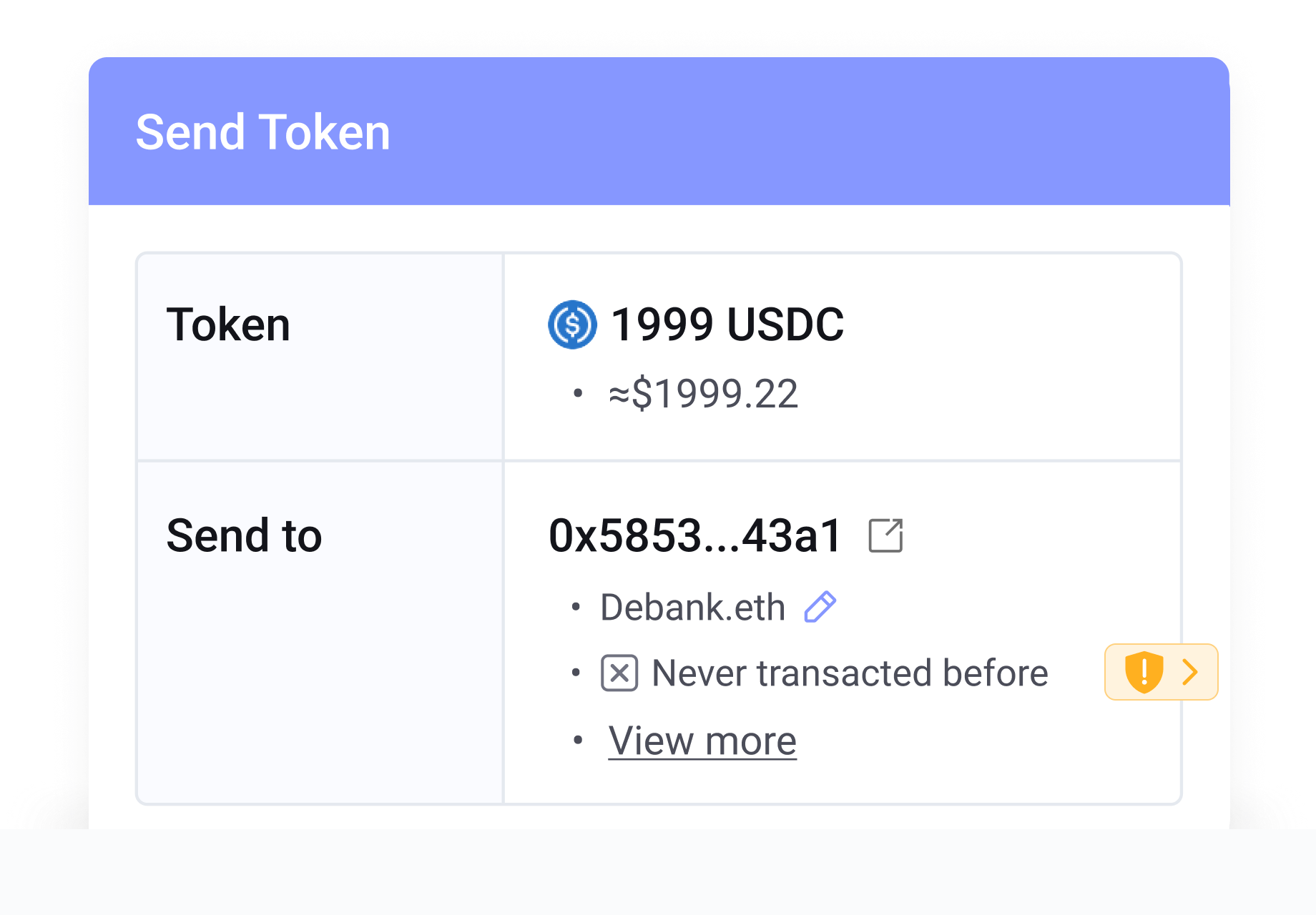
    A schematic of pre-transaction checks showing simulated token flows, fee estimates, and risk warnings—useful to determine whether a DeFi transaction matches user intent.

    How Rabby’s transaction simulation and pre-signature scanning actually work

    At the mechanism level, simulation means the wallet constructs the exact transaction payload you’re about to sign and runs that payload against a local or remote node (or a deterministic EVM emulator) to estimate the state changes the smart contract will make. The output isn’t a vague “ok” or “danger” flag — it is a predicted delta: token flows, approvals consumed, and gas cost. Rabby combines that simulated delta with an on-device security engine that flags contextual hazards: calls to contracts previously linked to exploits, unusually large unlimited approvals, or addresses that don’t appear to exist on-chain.

    Two practical consequences follow. First, simulation prevents many forms of blind signing: you can see that a “swap” will actually withdraw tokens A and deposit tokens B, and that an approval will leave an allowance of X rather than “infinite.” Second, the security scan provides pattern-based warnings (hacked-contract history, suspicious approval patterns) that would be invisible if you only viewed the raw ABI or calldata. For power users who routinely sign multistep transactions or interact with novel protocols, that combination moves a lot of speculative risk into visible territory.

    Side-by-side: Rabby vs typical EVM wallets (MetaMask, Trust Wallet, Coinbase Wallet)

    Here’s a compact comparative frame that emphasizes the trade-offs that matter in practice rather than feature lists:

    – Simulation and pre-checks: Rabby — built-in simulation and a pre-transaction scanner that displays exact estimated token balance changes and fees; MetaMask/Trust/Coinbase — at best show transaction details but generally lack deterministic pre-execution simulation integrated into the UI.

    – Automatic network switching: Rabby detects and switches networks for visited dApps, removing a common UX hazard; other wallets typically require manual switching, increasing the risk of signing on the wrong chain.

    – Hardware wallet integration: Rabby supports Ledger, Trezor, Keystone and others with deep compatibility; mainstream wallets also support hardware devices, but the combination of simulation + hardware signing is where Rabby targets a security sweet spot.

    – Approval management: Rabby includes native revocation tools to view and cancel token approvals; while other wallets or third-party services provide similar tools, Rabby’s integrated approach reduces the friction of housekeeping approvals across 90+ EVM chains.

    – Institutional features: Rabby integrates with multi-sig and custody solutions (Gnosis Safe, Fireblocks, etc.), which matters if you’re moving toward institutional operational processes. Many consumer wallets lack seamless enterprise integrations.

    Where simulation reduces risk — and where it stops short

    Simulation is powerful but bounded. It directly addresses three common failure modes: (1) mistaken approvals (you think you’re approving 100 tokens but you’re approving a contract to transfer unlimited tokens), (2) mis-specified transactions (wrong token, wrong recipient, or the dApp sending funds to a contract you didn’t intend), and (3) poor UX that leads to signing on the wrong chain. By producing concrete, human-readable deltas, Rabby reduces cognitive load in those scenarios.

    But simulation cannot magically stop all losses. It cannot reverse on-chain execution; it cannot detect logic flaws in a smart contract that manifest only in unusual runtime conditions not captured by the simulation state; and it cannot eliminate front-running or MEV risks inherent to public mempools. Importantly, simulation results depend on the state snapshot used: if the node or emulator is fed stale or manipulated state data, the predicted deltas will be misleading. That’s why combining simulation with hardware signing, multi-sig for high-value transactions, and approval revocation is not redundancy — it’s defense-in-depth.

    Correcting two widespread misconceptions

    Misconception 1 — “If a wallet simulates a transaction, it’s safe.” Correction: Simulation reveals intent and common exploit patterns, but safety is probabilistic. It lowers exposure to classically avoidable mistakes (blind approvals, wrong-chain mistakes) but doesn’t immunize you against zero-day contract bugs, oracle manipulation, or social-engineered approvals outside the simulated path.

    Misconception 2 — “Open-source wallets are automatically safe.” Correction: Open source increases transparency and enables audits, but it’s not a substitute for active security practices. Rabby is MIT-licensed and open-source, which aids third-party review, but historical incidents (the 2022 Rabby Swap exploitation) remind us that code accessibility + audit does not equal perfect safety. The team’s response then — freezing the contract, compensating users, and enhancing audits — is a practical governance signal, but not a guarantee against future issues.

    Decision framework: when to prefer Rabby for your DeFi workflow

    Use this heuristic to decide whether Rabby’s trade-offs align with your operational needs:

    – Low-value, casual interactions (small swaps, single-chain toy contracts): any reputable wallet is acceptable; convenience and mobile support may carry more weight.

    – High-frequency DeFi trading across L2s and alternative EVM chains: Rabby’s automatic network switching and simulation save time and reduce slips that cost money.

    – Large-value transfers, custody or institutional deployments: pair Rabby with hardware wallets and multi-sig custody; Rabby’s integrations with Gnosis Safe and enterprise custodians make it easier to fold into institutional workflows.

    – Ongoing portfolio management: Rabby aggregates tokens, NFTs, and DeFi positions across connected chains, which simplifies monitoring but remember there is no fiat on-ramp or native staking — add external services where needed.

    Practical steps to use simulation safely — a short checklist

    1. Always read the simulated balance delta and gas estimate before signing. The number should match your intent: amount out, recipient, and allowance changes.

    2. Use hardware signing for high-value approvals and swaps; treat simulation as an additional confirmation layer, not a replacement for secure key custody.

    3. Periodically run the built-in approval revocation tool to reduce standing allowances — it’s the simplest way to shrink attack surface.

    4. For institutional flows, require multi-sig thresholds for asset movement and deploy Rabby in conjunction with enterprise custody integrations.

    5. If you encounter a suspicious warning (hacked contract, nonexistent address), pause and research. Simulation gives a readable symptom; the correct response is verification, not reflexive approval.

    For readers who want to try a wallet with simulation-focused workflows and deep hardware compatibility, you can find more on rabby and evaluate whether its combination of simulation, automatic network switching, and integrated revocation maps onto your risk profile and operational needs.

    What to watch next — signals that will matter

    Three near-term signals will influence how valuable pre-signing simulation becomes: (1) the growth of multi-chain DeFi activity — more chains and cross-chain bridges increase the chance of wrong-network errors; (2) institutional adoption — if custody vendors and enterprises standardize on wallets that provide deterministic pre-checks, simulation becomes an industry baseline; (3) improvements in mempool privacy and MEV mitigation — as front-running defenses evolve, the practical importance of seeing exact deltas may shift from tactical protection to auditability and compliance evidence. Each is conditional: none guarantees that simulation will be the universal solution, but each raises the conditional value of having it built into your wallet.

    FAQ

    Does Rabby’s simulation stop scam dApps from tricking users?

    Not entirely. Simulation helps reveal what the transaction will do to your balances and whether approvals are unusually permissive, which often exposes scam patterns. However, sophisticated scams that manipulate off-chain data or exploit oracle mechanics can still succeed; simulation reduces certain classes of risk but is not a universal guard.

    How should I combine Rabby with a hardware wallet for maximum safety?

    Use Rabby’s UI and simulation to inspect the transaction and then approve the same transaction on your hardware device. For very large or multi-step operations, require multi-sig. Treat the hardware wallet as the root of trust and Rabby’s simulation as a decision aid rather than the final security control.

    Does Rabby support all chains and DeFi primitives?

    Rabby supports over 90 EVM-compatible chains including the major L1s and L2s, and it aggregates DeFi positions across them. But it does not currently include a fiat on-ramp or native in-wallet staking. If you need fiat rails or native staking, plan to use external services alongside Rabby.

    Given Rabby’s 2022 incident, is it safe to trust it now?

    Security is about processes, not absolutes. The 2022 exploit led to a concrete incident response and compensations, and Rabby has since expanded audits and safety tooling. That improves confidence, but prudent users still combine multiple controls: hardware wallets, approval revocation, small test transactions, and multi-sig for high-value flows.

    Final thought: simulation changes the human-computer interaction in DeFi from an act of faith to an informed judgment. For power users operating across chains, that shift is meaningful — but it only pays off when combined with strong custody, disciplined allowance management, and an institutional mindset about transaction approvals. Use simulation to ask better questions of every signing prompt, and let those answers guide when you move funds, approve contracts, or scale an operational process.

  • Live Dealer vs RNG Slots – Which Platform Gives You the Best Pay‑Outs and Bonus Value?

    Negli ultimi anni il dibattito tra slot RNG (Random Number Generator) e giochi con croupier dal vivo è diventato sempre più acceso. Da un lato, le slot RNG offrono una velocità di gioco ininterrotta, grafiche spettacolari e la possibilità di giocare 24/7; dall’altro, i tavoli live ricreano l’atmosfera di un vero casinò, con dealer reali, interazioni vocali e una percezione di maggiore trasparenza.

    Chi si basa sui dati, però, non si accontenta del solo RTP (Return to Player). Il vero punto di svolta è il valore complessivo dei bonus: quanto è possibile trasformare un bonus benvenuto, dei giri gratuiti o un cash‑back in profitto netto? Per rispondere a queste domande, abbiamo analizzato 12 piattaforme (sei con licenza ADM, sei non‑AAMS) durante un periodo di sei mesi, confrontando payout medio, frequenza dei bonus, volatilità e tempi di gioco.

    Per chi vuole approfondire le offerte più competitive, consigliamo di consultare la lista dei migliori casino online, una risorsa indipendente che raccoglie recensioni aggiornate e codici promozionali verificati.

    La struttura dell’articolo segue una logica data‑driven: partiamo dalla teoria dei payout, passiamo ai bonus di benvenuto, analizziamo i risultati concreti delle slot RNG e dei tavoli live, e concludiamo con una raccomandazione personalizzata per il giocatore medio.

    1. Come vengono calcolati i payout: RTP, volatilità e margine del casinò

    Il Return to Player (RTP) è una percentuale teorica che indica quanto, in media, una slot restituisce al giocatore per ogni 100 € scommessi. È calcolato su milioni di spin in un ambiente simulato, quindi il valore reale può discostarsi leggermente a causa della varianza.

    La volatilità, invece, descrive la frequenza e l’entità delle vincite. Una slot ad alta volatilità paga raramente ma offre premi elevati; una a bassa volatilità genera vincite piccole ma costanti. Nei giochi live, la volatilità è più legata al ritmo delle mani: il blackjack a 1:1 ha una volatilità bassa, mentre il baccarat con side bet “Dragon Bonus” può diventare altamente volatile.

    Il margine del casinò, o house edge, è semplicemente 100 % – RTP. Un casinò con RTP del 96,5 % ha un margine dello 0,35 %. Questo valore è costante per tutti i giochi della stessa categoria, ma può variare tra licenze ADM (spesso più trasparenti) e licenze offshore, dove i casinò hanno maggiore libertà di impostare RTP più bassi.

    In sintesi, il payout reale dipende da tre variabili interconnesse: RTP teorico, volatilità del gioco e margine applicato dal casinò. Solo valutandole insieme si può stimare il risultato a lungo termine.

    2. Bonus di benvenuto: quantità vs requisiti di scommessa

    I bonus di benvenuto rimangono la leva più potente per attrarre nuovi giocatori. Le offerte più comuni includono:

    • Deposit match: 100 % fino a €200 + 50 giri gratuiti.
    • Cash‑back: 10 % delle perdite nette nei primi 7 giorni.
    • Giri gratuiti: 100 giri su una slot con RTP 96,5 % senza deposito aggiuntivo.

    Nei casinò live, i requisiti di scommessa (wagering) tendono a essere più alti, spesso 40x il valore del bonus, perché il casinò vuole compensare il margine più elevato dei tavoli. Nelle slot RNG, i requisiti scendono a 30x o 25x, rendendo più veloce il rilascio del capitale.

    Esempio pratico: con un deposito di €100, un bonus 100 % + 50 giri su una slot RNG a RTP 97 % e requisito 30x genera un valore netto di circa €80 (considerando una vincita media del 2 % sui giri). Lo stesso deposito in un casinò live con bonus 50 % + 20 giri e requisito 40x porta a un valore netto di €45, poiché il capitale è legato a mani con house edge più alto.

    Bonus “no‑deposit” nei giochi live

    • Disponibili solo su piattaforme promozionali limitate.
    • Tipicamente €5‑€10 con requisito 50x.
    • Impatto sul ROI iniziale: 0,5 %–1 % di ritorno medio, utile solo per testare la piattaforma.

    Giri gratuiti su slot RNG ad alto RTP

    • Offerte su slot come Mega Joker (RTP 99,0 %) o Blood Suckers (RTP 98,0 %).
    • ROI medio per 100 giri: 2,5 €–3,0 €, a condizione di rispettare il requisito di 30x.

    3. Analisi dei payout medi su slot RNG nei top 5 casinò

    Casinò (licenza) Slot più popolare RTP medio Bonus di benvenuto Requisito di scommessa
    Casino A (ADM) Starburst 96,1 % 100 % fino a €200 + 50 giri 30x
    Casino B (non‑AAMS) Book of Dead 96,7 % 150 % fino a €300 + 100 giri 35x
    Casino C (ADM) Gonzo’s Quest 95,9 % 100 % fino a €150 + 75 giri 28x
    Casino D (non‑AAMS) Mega Joker 99,0 % 200 % fino a €500 + 200 giri 40x
    Casino E (ADM) Blood Suckers 98,0 % 50 % fino a €100 + 20 giri 25x

    Le promozioni periodiche, come tornei “Pay‑Back” settimanali, possono aumentare il payout medio di 0,2‑0,4 % per i giocatori più attivi. Tuttavia, il guadagno aggiuntivo è spesso compensato da requisiti di scommessa più stringenti, per cui è fondamentale calcolare il valore netto prima di partecipare.

    4. Live dealer: blackjack, roulette e baccarat – chi paga di più?

    Il blackjack live standard offre un RTP intorno al 99,2 % quando il giocatore utilizza una strategia di base ottimale. Varianti come Blackjack Switch riducono l’RTP a 98,2 % a causa delle regole di split aggiuntive.

    La Lightning Roulette introduce moltiplicatori casuali (50x‑500x) che aumentano l’RTP teorico a 97,0 % in media, ma la volatilità è estremamente alta; la maggior parte delle scommesse rimane a 2,7 % di house edge.

    Il baccarat live tradizionale ha un RTP del 98,94 % sul banco e del 98,76 % sul giocatore, con una leggera penalità per il “tie”. L’opzione Dragon Bonus può spingere l’RTP del giocatore a 99,5 % ma con un requisito di puntata più elevato.

    I bonus specifici per i tavoli live (es. 10 % di cash‑back su blackjack per 30 giorni) possono migliorare il payout effettivo del 0,3 %‑0,5 %, ma solo per i giocatori che mantengono un volume di gioco costante.

    5. Il fattore “tempo di gioco”: velocità delle mani live vs rapidità delle slot RNG

    Una slot RNG genera circa 600‑800 spin all’ora su dispositivi mobili, mentre un tavolo live di blackjack produce 30‑45 mani all’ora, a seconda del numero di giocatori.

    Questa differenza di ritmo incide direttamente sui requisiti di scommessa: con un bonus da €100 e requisito 30x, un giocatore di slot può completarlo in 3‑4 ore di gioco continuo, mentre lo stesso requisito su blackjack richiede 8‑10 ore di mani.

    Consiglio pratico: i “cacciatori di bonus” dovrebbero privilegiare le slot RNG per soddisfare rapidamente i requisiti, mentre i “high‑roller” che amano l’interazione sociale possono accettare una più lenta progressione in cambio di potenziali vincite più alte nei tavoli live.

    6. Promozioni ricorrenti: cash‑back, tornei e programmi fedeltà

    • Cash‑back settimanale: 5 % delle perdite nette su slot RNG, pagato ogni lunedì.
    • Cash‑back mensile live: 10 % delle perdite su blackjack e roulette, erogato il primo del mese.
    • Tornei slot: leaderboard settimanale con premi fissi (€200) e jackpot progressivi.
    • Tornei live: “Live Blackjack Tournament” con buy‑in €25, premio totale €500.

    I programmi fedeltà differiscono per focus: le piattaforme orientate al live premiano il numero di mani giocate con punti VIP, mentre quelle RNG convertono spin in “coins” che possono essere scambiati per giri gratuiti o bonus cash.

    Programmi VIP e livelli di status

    • Livello 1 (Bronze): 0,1 % di cash‑back extra su slot, accesso a tornei esclusivi.
    • Livello 2 (Silver): 0,25 % di cash‑back su tutte le categorie, limiti di prelievo più alti.
    • Livello 3 (Gold): 0,5 % di cash‑back, manager personale, inviti a eventi live.

    I giocatori che raggiungono livelli superiori ottengono un miglioramento medio del payout del 0,3 %‑0,6 % a seconda della categoria di gioco.

    7. Impatto della regolamentazione (AAMS vs non‑AAMS) sui payout e sui bonus

    Le licenze AAMS (ora ADM) impongono controlli rigorosi su RTP, verificati da audit indipendenti. Questo garantisce trasparenza: il valore indicato sul sito deve corrispondere al risultato medio su un campione di almeno 1 milione di spin.

    Le licenze offshore, invece, consentono una maggiore flessibilità nella definizione di RTP e nei termini dei bonus. Alcuni casinò non‑AAMS offrono bonus più generosi (es. 200 % di deposit match) ma a scapito di un RTP medio più basso (94‑95 %).

    Per chi desidera massima sicurezza, il sito Pokerstrategy elenca le piattaforme con licenza ADM, evidenziando le politiche di payout e le condizioni dei bonus. Anche per i giocatori interessati ai pagamenti criptovalute, Pokerstrategy fornisce una panoramica dei casinò che accettano Bitcoin o Ethereum, senza però fare claim di superiorità statistica.

    8. Qual è la scelta migliore per il giocatore medio?

    I dati raccolti mostrano che le slot RNG offrono un payout medio più alto (RTP 96,5 %‑98,5 %) e requisiti di scommessa più contenuti, rendendole ideali per i cacciatori di bonus. I giochi live, con RTP leggermente inferiori ma con un’esperienza più immersiva, risultano più adatti ai high‑roller che cercano grandi vincite occasionali e valorizzano l’interazione sociale.

    Il casual player, che gioca per divertimento e non per profitto, può trovare un equilibrio scegliendo tavoli live con side bet a bassa volatilità (es. Blackjack con rendita standard) e integrando occasionalmente slot a bassa volatilità per sfruttare i giri gratuiti.

    In conclusione, la decisione dipende da tre fattori chiave:
    1. Obiettivo di profitto – se si punta a massimizzare il ritorno netto, le slot RNG sono la scelta più efficiente.
    2. Preferenza di gioco – chi ama l’atmosfera da casinò fisico troverà più valore nei tavoli live, soprattutto con bonus dedicati.
    3. Tempo a disposizione – i giocatori con poco tempo dovrebbero optare per le slot, mentre chi può dedicare ore giornaliere può sfruttare i vantaggi dei programmi VIP live.

    Conclusione

    Abbiamo confrontato RTP, volatilità, bonus di benvenuto, velocità di gioco e impatto della regolamentazione per capire quale piattaforma offra il miglior rapporto tra payout e valore dei bonus. Le slot RNG emergono come la scelta più redditizia per chi vuole soddisfare rapidamente i requisiti di scommessa e ottenere il massimo ritorno teorico. I giochi live, invece, mantengono un fascino unico e premi più alti per i giocatori disposti a investire tempo e capitale.

    Utilizzate i criteri illustrati in questo articolo per valutare personalmente le offerte dei casinò. Per ulteriori confronti dettagliati e per accedere alle promozioni più vantaggiose, non dimenticate di consultare la lista dei migliori casino online e di fare riferimento a Pokerstrategy come punto di partenza per una scelta informata.

  • Navigating the Future of Multi‑Currency Casinos: How Global Payments Are Shaping Bonus Strategies

    Online gambling has exploded beyond the borders of traditional markets, turning a once‑regional pastime into a truly global industry. Players in Europe, Latin America, and the bustling streets of Southeast Asia now expect a frictionless experience that mirrors the speed of a tap‑and‑go payment app. They want to deposit in euros, withdraw in dollars, and see their winnings reflected in the currency of their everyday life—all without hidden fees or confusing exchange‑rate tables.

    Because of that demand, multi‑currency support has shifted from a nice‑to‑have feature to a technical prerequisite. Modern platforms must integrate dozens of fiat channels, stable‑coin bridges, and instant‑settlement APIs while keeping fraud‑prevention tight and latency low. The way money moves in and out of an online casino is redefining how operators craft and deliver bonuses. For players looking for a vibrant ecosystem, sites like online casino singapore illustrate the merging of local payment methods with global bonus structures.

    In the sections that follow we will explore five interconnected pillars: the technology that powers cross‑border payments, the evolving regulatory tapestry, the redesign of bonus architecture for a currency‑fluid audience, the psychology that underpins trust and perceived value, and finally a forward‑looking roadmap of trends that will reshape both payments and promotions.

    1. The Technological Backbone of Multi‑Currency Payments

    The engine behind today’s seamless deposits is a stack of API‑driven gateways that translate a player’s local bank transfer, e‑wallet, or crypto wallet into a universal ledger entry. Providers such as Stripe, Adyen, and specialized gaming processors expose RESTful endpoints that handle currency conversion in real time, applying AI‑trained models to predict the most cost‑effective route.

    When fiat meets blockchain, latency becomes a decisive factor. A traditional ACH transfer can take two to three business days, whereas a stable‑coin bridge on a Layer‑2 network settles in under ten seconds. Operators therefore often run parallel pipelines: a fiat‑first path for regulatory‑heavy jurisdictions and a crypto‑first path for markets where digital assets enjoy regulatory clarity.

    Fraud detection also diverges. Machine‑learning engines monitor velocity, IP‑geography, and device fingerprints differently for credit‑card deposits versus wallet‑to‑wallet swaps. A sudden surge in USD deposits from a previously inactive Russian IP flag triggers a higher‑resolution KYC check, while a similar spike in USDT from a verified crypto address may be cleared automatically if the transaction stays within preset risk thresholds.

    Sandbox environments allow operators to test new payment methods without exposing live funds. A modular architecture—micro‑services for conversion, settlement, and compliance—lets a casino spin up a “pay‑to‑play” button that instantly converts a €100 deposit into a USD‑denominated welcome bonus.

    Typical transaction flow example
    1. Player selects “Deposit €100” and chooses a local bank‑transfer option.
    2. The gateway’s API calls a currency‑conversion service, locking the exchange rate at 1 EUR = 1.08 USD.
    3. The system records the deposit in the player’s wallet as €100, then creates a mirrored entry of $108 in the bonus ledger.
    4. A dynamic match bonus of 150 % is applied, crediting an additional $162 (150 % of $108).
    5. The player sees a total of $270 in bonus credits, all displayed in USD, while the underlying accounting retains the original €100 for audit purposes.

    This flow illustrates how a single deposit can trigger multiple, currency‑aware actions that directly influence the size and timing of a bonus offer.

    Payment Path Avg. Settlement Time Typical Fees Ideal Use‑Case
    SEPA Transfer (EUR) 1‑2 business days €0.30 + 0.1 % EU‑based players preferring bank transfers
    Credit Card (USD) Instant 2‑3 % High‑value deposits in North America
    Stable‑coin (USDT) <10 seconds <$0.01 Crypto‑savvy markets, rapid “pay‑to‑play”
    E‑wallet (PayPal) 5‑30 seconds 1‑2 % Mobile‑first players in Asia-Pacific

    By blending these pathways, operators can offer a truly global payment menu while keeping the bonus engine fed with real‑time conversion data.

    2. Regulatory Evolution: From Regional Silos to a Global Compliance Framework

    Historically, online casino licensing resembled a patchwork quilt: Malta, Gibraltar, Curacao, and various state regulators each imposed their own reporting formats, AML thresholds, and currency‑handling rules. Operators had to maintain separate compliance teams for each jurisdiction, a costly and error‑prone arrangement that stifled innovation.

    Recent years have seen a push toward harmonisation. The eCOGRA certification now incorporates a set of baseline AML‑CFT (Anti‑Money‑Laundering and Counter‑Financing of Terrorism) standards that many jurisdictions adopt verbatim. Meanwhile, the European Union’s PSD2 directive forces payment service providers to expose secure APIs, making it easier for casinos to integrate licensed banks while preserving strong customer authentication.

    The EU’s Digital Euro project adds another layer: a central‑bank digital currency that will settle instantly on a public ledger, yet remain under the same regulatory umbrella as cash. For a casino, this means future deposits could be verified by the central bank itself, dramatically reducing the compliance burden for euro‑zone players.

    Asian markets are moving in parallel. Countries such as Singapore and Malaysia have introduced e‑payment reforms that mandate token‑isation of card data and require real‑time transaction monitoring. These reforms encourage the adoption of local e‑wallets like PayNow and DuitNow, which in turn shape the bonus terms that operators can safely offer.

    Compliance now dictates bonus architecture in three concrete ways:

    1. Wagering limits tied to jurisdiction – A “no‑wager” welcome bonus may be permissible in Malta but prohibited in the UK, where regulators demand a minimum 30‑times rollover for any deposit‑linked promotion.
    2. Geography‑specific caps – Operators must enforce currency‑based caps (e.g., €500 per player per month) to stay within AML reporting thresholds.
    3. Transparent source‑of‑funds checks – Bonus abuse detection systems must flag rapid currency swaps that could mask illicit funding.

    Looking ahead, industry bodies are discussing a “global gaming licence” that would act as a single point of validation for multi‑currency transactions, similar to the EU’s passporting system for financial services. If adopted, such a licence could automatically certify that a casino’s payment flow complies with AML, tax, and responsible‑gaming rules across all participating jurisdictions, dramatically simplifying bonus compliance.

    3. Redesigning Bonus Structures for a Multi‑Currency Audience

    Flat‑rate bonuses—“Get $50 free”—are losing traction when players can instantly convert that amount into a higher‑value currency or use a stable‑coin with negligible fees. A €50 bonus in a German market may be worth less than a $50 bonus in the United States after conversion, leading to perceived inequity.

    Dynamic, currency‑agnostic bonuses solve the problem by calculating the match percentage at the moment of deposit and applying the prevailing exchange rate. For example, a 200 % match on a €100 deposit might translate to a $216 credit if the EUR/USD rate is 1.08, ensuring the player receives a proportional reward regardless of where the money originated.

    Tiered loyalty programs are also evolving. Operators now award “payment method points” alongside traditional play‑based points. A player who deposits via a local e‑wallet earns a 2 % bonus multiplier, while a stable‑coin deposit adds an extra 1 % for the added liquidity benefit. Over time, these multipliers can be stacked, encouraging diversification of payment channels and reducing reliance on costly credit‑card processing.

    Risk management is a balancing act. Real‑time currency analytics monitor deposit patterns, flagging sudden spikes in a low‑risk currency (e.g., USDT) that could indicate bonus‑chasing bots. Operators can automatically tighten wagering requirements or impose a temporary cap on bonus eligibility for that currency, preserving the promotion’s integrity while keeping genuine players satisfied.

    Key elements of a modern multi‑currency bonus engine

    • Live exchange feed – Pulls rates from multiple providers to avoid single‑source bias.
    • Currency‑aware wagering calculators – Convert bonus value back to the player’s deposit currency for transparent rollover metrics.
    • Method‑based incentives – Extra match percentages or free spins for using under‑utilised payment options.
    • Abuse detection thresholds – Real‑time alerts when conversion margins exceed historical averages.

    By integrating these components, casinos can deliver promotions that feel personalized, fair, and financially sound across a mosaic of currencies.

    4. Player Psychology: Trust, Transparency, and the Perceived Value of Bonuses

    When a player sees a bonus displayed in their native currency, the perceived value spikes instantly. A Singapore‑based player presented with a S$30 welcome bonus intuitively understands its purchasing power, whereas a USD‑denominated offer requires mental conversion and can feel less generous.

    Transparent conversion rates are essential. Some operators hide the exchange margin in fine print, leading to “rate shock” when the bonus is credited. Providing an in‑app calculator that shows the exact rate used—e.g., 1 S$ = 0.73 USD—builds trust and reduces support tickets.

    “No‑fee” or “zero‑exchange‑rate” promotions have a pronounced impact in emerging markets where transaction costs can erode a significant portion of a small deposit. A case study from a mid‑size Asian operator revealed a 27 % lift in first‑deposit conversions when they launched a promotion that absorbed all currency‑conversion fees for deposits under $50.

    Another psychological lever is the “instant‑gratification” effect. Players who receive bonus credits within seconds of a deposit are more likely to continue playing, as the reward loop feels immediate. This is especially true for live dealer games, where the social element amplifies the excitement of a fresh bankroll.

    Effective communication tactics

    • Localized UI: Show deposit and bonus fields in the player’s language and currency.
    • Multilingual FAQs: Explain how exchange rates are sourced and how wagering is calculated.
    • Real‑time notifications: Push a message like “Your S$20 deposit has been matched with a S$30 welcome bonus—no conversion fees applied!”

    These strategies turn a technical advantage into a psychological edge, reinforcing the casino’s reputation as a trusted online casino and encouraging long‑term loyalty.

    5. The Roadmap Ahead: Emerging Trends that Will Redefine Bonuses and Payments

    The next wave of innovation will be driven by three converging forces: central bank digital currencies (CBDCs), decentralized finance (DeFi) liquidity pools, and AI‑powered personalization engines.

    CBDCs – As the Digital Euro and the Singaporean digital dollar pilot programs mature, casinos will be able to accept sovereign digital cash that settles instantly and carries built‑in AML checks. A CBDC‑linked bonus could be auto‑adjusted for inflation, ensuring the promotional value remains stable over months.

    DeFi liquidity pools – Gaming operators are already experimenting with smart contracts that lock user deposits into yield‑generating pools. The generated interest can fund “risk‑free” bonus credits, allowing casinos to offer higher match percentages without inflating their own cost base.

    AI‑driven personalized bonuses – Machine‑learning models will analyze a player’s deposit history, preferred currencies, and game‑type affinity (e.g., slot volatility vs. live dealer tables) to generate one‑off offers such as “Get 120 % match on your next €30 deposit, plus 10 free spins on Starburst.” The system will also predict the optimal time to push the offer, maximizing conversion while respecting responsible‑gaming limits.

    Anticipated player behavior shifts

    • Instant‑withdraw expectations – With CBDCs and Layer‑2 solutions, players will demand sub‑second withdrawals, turning “cash‑out speed” into a competitive differentiator.
    • Cross‑border loyalty – A player who travels from Berlin to Bangkok will expect their loyalty tier and bonuses to follow them seamlessly, regardless of the local currency used for the next deposit.

    Potential challenges

    • Regulatory lag may leave operators exposed if a new CBDC is classified as a “financial instrument” requiring a banking licence.
    • Security of cross‑chain transactions remains a concern; a single exploit in a bridge could jeopardise millions of bonus credits.
    • Dispute‑resolution mechanisms must evolve to handle multi‑jurisdictional claims, especially when a bonus is contested across different legal regimes.

    Actionable recommendations

    1. Invest in modular payment APIs that can plug in CBDC connectors as they become available.
    2. Build a data lake that aggregates currency conversion, player behaviour, and compliance events for AI model training.
    3. Create a cross‑functional bonus council – compliance, product, and tech – to vet new promotions before launch, ensuring they meet emerging regulatory thresholds.

    By proactively embracing these trends, operators can future‑proof their bonus architecture, stay ahead of the competition, and continue to attract a globally diversified player base.

    Conclusion

    The convergence of cutting‑edge payment technology and adaptive, data‑driven bonus design is reshaping the online casino landscape. Multi‑currency ecosystems are no longer optional add‑ons; they are the foundation for delivering transparent, equitable promotions that resonate with players from Singapore to Stockholm. Operators who invest now in flexible payment modules, real‑time conversion engines, and AI‑powered bonus personalization will secure a competitive edge in a market where speed, trust, and relevance dictate success.

    For those seeking further insight, the resource hub Atlanteanconspiracy offers a neutral overview of emerging payment trends and regulatory updates. By staying informed and embracing the innovations outlined above, casino operators can position themselves at the forefront of the industry’s next global expansion.

  • Lorem ipsum dolor sit amet

    Lorem ipsum dolor sit amet consectetur adipiscing elit. Quisque faucibus ex sapien vitae pellentesque sem placerat. In id cursus mi pretium tellus duis convallis. Tempus leo eu aenean sed diam urna tempor. Pulvinar vivamus fringilla lacus nec metus bibendum egestas. Iaculis massa nisl malesuada lacinia integer nunc posuere. Ut hendrerit semper vel class aptent taciti sociosqu. Ad litora torquent per conubia nostra inceptos himenaeos.

    Lorem ipsum dolor sit amet consectetur adipiscing elit. Quisque faucibus ex sapien vitae pellentesque sem placerat. In id cursus mi pretium tellus duis convallis. Tempus leo eu aenean sed diam urna tempor. Pulvinar vivamus fringilla lacus nec metus bibendum egestas. Iaculis massa nisl malesuada lacinia integer nunc posuere. Ut hendrerit semper vel class aptent taciti sociosqu. Ad litora torquent per conubia nostra inceptos himenaeos.

    Lorem ipsum dolor sit Non Existing amet consectetur adipiscing elit. Quisque faucibus ex sapien vitae pellentesque sem placerat. In id cursus mi pretium tellus duis convallis. Tempus leo eu aenean sed diam urna tempor. Pulvinar vivamus fringilla lacus nec metus bibendum egestas. Iaculis massa nisl malesuada lacinia integer nunc posuere. Ut hendrerit semper vel class aptent taciti sociosqu. Ad litora torquent per conubia nostra inceptos himenaeos.

    Lorem ipsum dolor sit amet consectetur adipiscing elit. Quisque faucibus ex sapien vitae pellentesque sem placerat. In id cursus mi pretium tellus duis convallis. Tempus leo eu aenean sed diam urna tempor. Pulvinar vivamus fringilla lacus nec metus bibendum egestas. Iaculis massa nisl malesuada lacinia integer nunc posuere. Ut hendrerit semper vel class aptent taciti sociosqu. Ad litora torquent per conubia nostra inceptos himenaeos.

    Lorem ipsum dolor sit amet consectetur adipiscing elit. Quisque faucibus ex sapien vitae pellentesque sem placerat. In id cursus mi pretium tellus duis convallis. Tempus leo eu aenean sed diam urna tempor. Pulvinar vivamus fringilla lacus nec metus bibendum egestas. Iaculis massa nisl malesuada lacinia integer nunc posuere. Ut hendrerit semper vel class aptent taciti sociosqu. Ad litora torquent per conubia nostra inceptos himenaeos.

    Lorem ipsum dolor sit amet consectetur adipiscing elit. Quisque faucibus ex sapien vitae pellentesque sem placerat. In id cursus mi pretium tellus duis convallis. Tempus leo eu aenean sed diam urna tempor. Pulvinar vivamus fringilla lacus nec metus bibendum egestas. Iaculis massa nisl malesuada lacinia integer nunc posuere. Ut hendrerit semper vel class aptent taciti sociosqu. Ad litora torquent per conubia nostra inceptos himenaeos.

    Lorem ipsum dolor sit amet consectetur adipiscing elit. Quisque faucibus ex sapien vitae pellentesque sem placerat. In id cursus mi pretium tellus duis convallis. Tempus leo eu aenean sed diam urna tempor. Pulvinar vivamus fringilla lacus nec metus bibendum egestas. Iaculis massa nisl malesuada lacinia integer nunc posuere. Ut hendrerit semper vel class aptent taciti sociosqu. Ad litora torquent per conubia nostra inceptos himenaeos.

    Lorem ipsum dolor sit amet consectetur adipiscing elit. Quisque faucibus ex sapien vitae pellentesque sem placerat. In id cursus mi pretium tellus duis convallis. Tempus leo eu aenean sed diam urna tempor. Pulvinar vivamus fringilla lacus nec metus bibendum egestas. Iaculis massa nisl malesuada lacinia integer nunc posuere. Ut hendrerit semper vel class aptent taciti sociosqu. Ad litora torquent per conubia nostra inceptos himenaeos.

    Lorem ipsum dolor sit amet consectetur adipiscing elit. Quisque faucibus ex sapien vitae pellentesque sem placerat. In id cursus mi pretium tellus duis convallis. Tempus leo eu aenean sed diam urna tempor. Pulvinar vivamus fringilla lacus nec metus bibendum egestas. Iaculis massa nisl malesuada lacinia integer nunc posuere. Ut hendrerit semper vel class aptent taciti sociosqu. Ad litora torquent per conubia nostra inceptos himenaeos.

    Lorem ipsum dolor sit amet consectetur adipiscing elit. Quisque faucibus ex sapien vitae pellentesque sem placerat. In id cursus mi pretium tellus duis convallis. Tempus leo eu aenean sed diam urna tempor. Pulvinar vivamus fringilla lacus nec metus bibendum egestas. Iaculis massa nisl malesuada lacinia integer nunc posuere. Ut hendrerit semper vel class aptent taciti sociosqu. Ad litora torquent per conubia nostra inceptos himenaeos.

    Lorem ipsum dolor sit amet consectetur adipiscing elit. Quisque faucibus ex sapien vitae pellentesque sem placerat. In id cursus mi pretium tellus duis convallis. Tempus leo eu aenean sed diam urna tempor. Pulvinar vivamus fringilla lacus nec metus bibendum egestas. Iaculis massa nisl malesuada lacinia integer nunc posuere. Ut hendrerit semper vel class aptent taciti sociosqu. Ad litora torquent per conubia nostra inceptos himenaeos.

    Lorem ipsum dolor sit amet consectetur adipiscing elit. Quisque faucibus ex sapien vitae pellentesque sem placerat. In id cursus mi pretium tellus duis convallis. Tempus leo eu aenean sed diam urna tempor. Pulvinar vivamus fringilla lacus nec metus bibendum egestas. Iaculis massa nisl malesuada lacinia integer nunc posuere. Ut hendrerit semper vel class aptent taciti sociosqu. Ad litora torquent per conubia nostra inceptos himenaeos.

    Lorem ipsum dolor sit amet consectetur adipiscing elit. Quisque faucibus ex sapien vitae pellentesque sem placerat. In id cursus mi pretium tellus duis convallis. Tempus leo eu aenean sed diam urna tempor. Pulvinar vivamus fringilla lacus nec metus bibendum egestas. Iaculis massa nisl malesuada lacinia integer nunc posuere. Ut hendrerit semper vel class aptent taciti sociosqu. Ad litora torquent per conubia nostra inceptos himenaeos.

    Lorem ipsum dolor sit amet consectetur adipiscing elit. Quisque faucibus ex sapien vitae pellentesque sem placerat. In id cursus mi pretium tellus duis convallis. Tempus leo eu aenean sed diam urna tempor. Pulvinar vivamus fringilla lacus nec metus bibendum egestas. Iaculis massa nisl malesuada lacinia integer nunc posuere. Ut hendrerit semper vel class aptent taciti sociosqu. Ad litora torquent per conubia nostra inceptos himenaeos.

    Lorem ipsum dolor sit amet consectetur adipiscing elit. Quisque faucibus ex sapien vitae pellentesque sem placerat. In id cursus mi pretium tellus duis convallis. Tempus leo eu aenean sed diam urna tempor. Pulvinar vivamus fringilla lacus nec metus bibendum egestas. Iaculis massa nisl malesuada lacinia integer nunc posuere. Ut hendrerit semper vel class aptent taciti sociosqu. Ad litora torquent per conubia nostra inceptos himenaeos.

  • Treoir iomlán ar Galactic Wins: spin saor in aisce agus straitéisí buaite

    Galactic Wins free spins stands out in a competitive market, and this step-by-step guide explains exactly how to make the most of it. San alt seo, déanfaimid iniúchadh ar gach gné den cheasaíneo Galactic Wins, ó chlárú go dtí straitéisí chun an leas is fearr a bhaint as na spin saor in aisce atá ar fáil. Cibé an bhfuil tú nua i saol na gceasaíneonna ar líne nó an bhfuil taithí agat cheana féin, gheobhaidh tú leideanna praiticiúla agus samplaí matamaiticiúla chun do sheansanna buaite a mhéadú.

    Cad atá Uait ar dtús

    Sula dtosaíonn tú, déan cinnte go bhfuil na nithe seo a leanas agat:

    • Nasc idirlín cobhsaí chun rochtain a fháil ar an suíomh gan bhriseadh.
    • Gléas comhoiriúnach – fón cliste, táibléad nó ríomhaire le brabhsálaí nua-aimseartha.
    • Doiciméad aitheantais bailí le haghaidh próiseas KYC nuair a bhíonn tú ag aistarraingt.
    • Modh íocaíochta réidh, mar chárta creidmheasa, sparán leictreonach nó cripte-airgeadra.
    • Tuiscint bhunúsach ar théarmaí agus coinníollacha an bhuannais, go háirithe na ceanglais gealltanais (wagering requirements).

    Clárú Céim ar Chéim

    Seo mar a chláraíonn tú le Galactic Wins:

    1. Téigh go dtí an suíomh oifigiúil ag baint úsáide as do bhrabhsálaí.
    2. Cliceáil ar an gcnaipe “Cláraigh” nó “Sign Up” atá le feiceáil go feiceálach.
    3. Líon isteach an fhoirm le d’ainm, seoladh ríomhphoist, agus dáta breithe.
    4. Cruthaigh pasfhocal láidir agus roghnaigh do chuid airgeadra tosaigh.
    5. Glac le téarmaí agus coinníollacha an cheasaíneo, agus deimhnigh go bhfuil tú os cionn aoise dleathach.
    6. Seol an fhoirm agus fan le ríomhphost dearbhaithe; cliceáil ar an nasc chun do chuntas a ghníomhachtú.
    7. Sínigh isteach le do dhintiúir agus téigh go dtí an rannóg “Taisce” chun d’éarlais tosaigh a dhéanamh, más mian leat.

    Nuair a bheidh tú cláraithe, is féidir leat rochtain a fháil ar na spin saor in aisce atá ar fáil, ach bí cinnte go léann tú na coinníollacha go cúramach.

    Straitéis Bhuanna

    Chun an leas is fearr a bhaint as d’airgead, tá sé riachtanach tuiscint a fháil ar na ceanglais ghealltanais. Samhlaigh go bhfaigheann tú 100 spin saor in aisce agus go bhfaigheann tú buaiteachas €50. Má tá ceanglas gealltanais 30x, caithfidh tú €1,500 (50 × 30) sa ghealltanais sular féidir leat aon airgead a aistarraingt. Ríomh:

    Buaiteachas ó spins: €50
    Ceanglas gealltanais: 30x
    Iomlan le geallúint: €50 × 30 = €1,500

    Má roghnaíonn tú cluichí le RTP ard (mar shampla sliotáin le RTP 96%), beidh do sheans níos fearr go dtiocfaidh tú amach ar bharr go fadtéarmach. Bain triail as cluichí le luaineacht íseal go meánach le haghaidh buanna níos minice, agus stórálann tú do bhuanna móra le haghaidh cluichí ard-luaineachta má tá anlamh agat le haghaidh riosca.

    Treoir Aip agus PWA

    Níl aip inscríofa ag Galactic Wins atá ar fáil ar Google Play nó Apple App Store, ach is féidir leat rochtain a fháil ar an suíomh trí bhrabhsálaí do ghléis. Moltar úsáid a bhaint as an leathanach gréasáin atá optamaithe do ghléasanna móibíleacha nó an aip gréasáin fhorásach (PWA) a sheoladh ó do bhrabhsálaí. Níl ort ach cuairt a thabhairt ar an suíomh, ansin roghnaigh “Add to Home Screen” ó roghchlár an bhrabhsálaí chun rochtain thapa a fháil amach anseo. Bíonn an leagan soghluaiste chomh feidhmiúil céanna leis an leagan deisce, le gach cluiche agus rogha íocaíochta ar fáil.

    Ceisteanna Coitianta

    An bhfuil sé sábháilte imirt ag Galactic Wins?

    Tá ceadúnas ag Galactic Wins ó Curacao, atá coitianta i measc ceasaíneonna ar líne. Mar sin féin, ba chóir duit a bheith ar an eolas go bhféadfadh cánacha áitiúla a bheith i gceist le do chuid buaiteachas, mar a mholtar go minic d’imreoirí ón AE nó ó na tíortha Nordacha. Tá sé tábhachtach taighde a dhéanamh ar na rialacha cánach i do thír féin.

    Conas is féidir liom mo chuid buaiteachas a aistarraingt?

    Téigh go dtí an rannóg “Banc” nó “Aistarraingt”, roghnaigh do mhodh íocaíochta, agus lean na treoracha. Déanfaidh an cheasaíneo do chuid doiciméad a fhíorú ar dtús (KYC), rud a thógfaidh cúpla lá. Coinnigh i gcuimhne go bhfuil teorainneacha ama agus íocaíochtaí éagsúla ag gach modh.

    An féidir liom na spin saor in aisce a úsáid ar aon chluiche?

    De ghnáth, bíonn teorainn leis na cluichí ar féidir na spin saor in aisce a úsáid. Seiceáil téarmaí an bhuannais le fáil amach cé na sliotáin atá san áireamh. Má úsáideann tú iad ar chluichí nach bhfuil ceadaithe, d’fhéadfaí do bhuaiteachas a chur ar neamhní.

    Cad iad na ceanglais gealltanais tipiciúla?

    Is gnách go mbíonn ceanglais gealltanais idir 20x agus 40x ar na spin saor in aisce. Léigh na téarmaí go cúramach chun a fháil amach cén méid atá i bhfeidhm, mar go mbíonn tionchar díreach aige ar do chumas aistarraingt.

    Leideanna Gairmiúla

    Roghnaigh cluichí le RTP níos airde ná 96%. Is minic a bhíonn RTP ard ag sliotáin le téamaí clasaiceacha nó le soláthróirí áirithe ar nós NetEnt nó Play’n GO. Seachain cluichí boird cosúil le roth an áidh nó keno, mar go mbíonn RTP níos ísle acu go minic. Chomh maith leis sin, coinnigh súil ar na cluichí le scair-íocaíochtaí (progressive jackpots) – cé go dtugann siad buaiteachas ollmhór, is minic a bhíonn RTP níos ísle acu agus luaineacht ard, mar sin ní mór duit a bheith ullamh do thréimhsí fada gan bua.

    Mar fhocal scoir, tá sé riachtanach a bheith freagrach agus tú ag imirt. Socraigh buiséad roimh ré agus cloí leis. Cuimhnigh gur chóir go mbeadh an cheasaíneonna ina ghníomhaíocht siamsaíochta, ní ina bhealach chun airgead a dhéanamh. Leis an treoir seo, tá tú réidh chun taitneamh a bhaint as do chuid ama le Galactic Wins ar bhealach sábháilte agus taitneamhach.

  • bet365 Slovenija: Praktični vodič za stave in igre

    Most iGaming guides are vague. This one is not — every step here is specific, actionable, and based on how the platform actually works. Spodaj najdete natančna navodila za registracijo, matematične izračune bonusov, pregled plačilnih metod, varnostne ukrepe in rešitve za pogoste težave — vse v slovenskem jeziku.

    Before You Start

    Preden začnete z registracijo in prvim vplačilom, preverite naslednje:

    • Starost: morate biti stari vsaj 18 let (v nekaterih jurisdikcijah 21 let).
    • Identifikacijski dokument: pripravite osebno izkaznico ali potni list za postopek KYC.
    • Plačilno sredstvo: imejte pripravljeno bančno kartico, e-denarnico ali bančno nakazilo.
    • Elektronski naslov: uporabite veljaven e-poštni naslov, saj boste na njega prejeli potrditvena sporočila.
    • Naprava: bet365 deluje prek mobilno optimiziranega spletnega mesta (PWA), ki ga zaženete iz brskalnika — ni potrebe po namestitvi aplikacije iz trgovine.
    • Odgovorno igranje: določite si mesečni limit in ne igrajte z denarjem, ki si ga ne morete privoščiti izgubiti.

    Creating Your Account

    Registracija pri bet365 je preprosta in traja manj kot pet minut. Sledite korakom:

    1. Odprite spletno mesto bet365 in kliknite gumb “Prijava” v zgornjem desnem kotu.
    2. Izberite “Registracija” in izpolnite obrazec z osebnimi podatki (ime, priimek, datum rojstva, država, naslov).
    3. Ustvarite uporabniško ime in močno geslo. Geslo naj vsebuje vsaj 8 znakov, vključno z veliko začetnico, številko in posebnim znakom.
    4. Vnesite svoj e-poštni naslov in telefonsko številko.
    5. Izberite valuto (EUR) in sprejmite pogoje poslovanja.
    6. Kliknite “Dokončaj registracijo”.
    7. Potrdite e-poštni naslov s klikom na povezavo v potrditvenem sporočilu.
    8. Opravite prvo vplačilo, da aktivirate morebitni dobrodošli bonus. Celoten postopek registracije najdete tudi na https://bet365-si.net/ pri njihovi uradni podpori.

    Bonus Mathematics

    Preden sprejmete bonus, razumejte matematiko. Bet365 običajno ponuja bonus do določenega zneska, npr. do 100 EUR ob prvem vplačilu. To pomeni, da morate vplačati 100 EUR, da dobite polni bonus. Vendar bonus ni takoj izplačljiv — izpolniti morate pogoje stav (rollover).

    Primer izračuna:

    • Vplačilo: 100 EUR
    • Bonus: 100 % do 100 EUR → bonus = 100 EUR
    • Rollover (pogosto 35×): 100 EUR (bonus) × 35 = 3.500 EUR
    • Skupni znesek stav: vplačilo (100 EUR) + bonus (100 EUR) = 200 EUR
    • Skupni promet, ki ga morate doseči: 200 EUR × 35 = 7.000 EUR

    Če stavite s povprečno stopnjo vračila (RTP) 95 %, lahko pričakujete, da boste od vsakega vloženega evra v povprečju izgubili 5 centov. To pomeni, da boste v primeru doseganja prometa 7.000 EUR v povprečju izgubili 350 EUR — kar je več kot bonus. Zato je bonus ugoden le, če stavite premišljeno in izkoriščate stavne priložnosti z višjim RTP. Vedno preberite pogoje bonusa: nekateri dovoljujejo stave samo na določene igre ali športe, drugi imajo časovno omejitev.

    Money In, Money Out

    Bet365 podpira več plačilnih metod, ki so prilagojene slovenskim uporabnikom. Spodaj je preglednica s povprečnimi časi obdelave:

    Metoda Minimalni znesek Čas pologa Čas dviga Provizija
    Bančna kartica (Visa, Mastercard) 10 EUR takoj 1–3 bank. dni 0 %
    e-denarnica (Skrill, Neteller) 10 EUR takoj 24 ur 0–1 %
    Bančno nakazilo 20 EUR 1–2 dni 2–5 bank. dni 0 %

    Pri dvigu denarja morate opraviti postopek preverjanja identitete (KYC). To običajno vključuje kopijo osebnega dokumenta, dokazilo o naslovu in morebitno selfie s dokumentom. Dvigi se obdelujejo hitreje, če uporabite isto metodo kot za polog. Opomba: bet365 deluje pod licenco Curacao (za določene regije), kar pomeni, da so lahko dobitki obdavčeni z lokalno davčno stopnjo — preverite slovensko zakonodajo glede obdavčitve dobitkov od iger na srečo.

    Safety & Licensing

    Bet365 je eden največjih igralniških operaterjev na svetu in ima dolgoletno zgodovino. Vendar pazite: če dostopate do bet365 prek različnih domen, se lahko licenca razlikuje. Za slovenske igralce je pomembno, da preverite, katera licenca velja za vašo registracijo. Običajno bet365 uporablja licence iz Malte (MGA), Združenega kraljestva (UKGC) ali Curacao. MGA in UKGC licence zagotavljajo višjo raven zaščite igralcev, medtem ko Curacao pomeni manj strog nadzor. Varnostni ukrepi vključujejo SSL šifriranje (128-bitno), 2FA (dvofaktorsko avtentikacijo) za prijavo, politiko odgovornega igranja in orodja za samopomoč (limiti, časovne omejitve). Vedno preverite, ali je v brskalniku prikazana ključavnica (SSL) in ali je URL pravilen.

    Fix It Fast

    Tukaj je nekaj pogostih težav in njihovih rešitev:

    • Pozabljeno geslo: kliknite “Pozabljeno geslo” in sledite navodilom za ponastavitev. Če e-pošta ne pride, preverite vsiljeno pošto.
    • Težave s prijavo: počistite piškotke brskalnika ali poskusite z drugim brskalnikom.
    • Dvig se zavleče: preverite, ali ste opravili KYC. Če ste, počakajte 24–48 ur in nato kontaktirajte podporo.
    • Bonus se ne kreditira: preverite, ali ste izpolnili pogoje (npr. minimalni vplačilo) in ali ste morda vnesli kodo bonusa.
    • Igralnica se ne nalaga: preverite internetno povezavo, posodobite brskalnik ali uporabite drugo napravo.
    • Račun blokiran: kontaktirajte podporo in pripravite dokumente za preverjanje.

    Pro Tips

    Kako ukrepate, če se dvig zavleče?

    1. Po preteku roka (npr. 24 ur za e-denarnice) preverite status dviga v zavihku “Transakcije”.
    2. Če status kaže “Obravnavanje”, počakajte še 24 ur.
    3. Nato kontaktirajte podporo prek klepeta v živo (na voljo 24/7) in navedite ID transakcije.
    4. Če podpora ne odgovori v 24 urah, pošljite e-pošto na support@bet365.com (sporočilo v angleščini pospeši rešitev).
    5. Za dvige nad 10.000 EUR lahko velja daljši postopek skrbnega pregleda — pričakujte do 5 bank. dni.
    6. Vzpostavite si prijazen odnos s podporo: vljudno in jasno opišite težavo.

    Common Questions

    Ali je bet365 zakonit v Sloveniji?

    Bet365 deluje pod mednarodnimi licencami, vendar slovenski igralci lahko dostopajo do platforme prek spleta. Preverite, ali je spletno mesto dostopno iz Slovenije in ali veljajo omejitve.

    Kako dolgo traja izplačilo?

    Čas izplačila je odvisen od metode: e-denarnice so običajno najhitrejše (24 ur), bančne kartice trajajo 1–3 dni, bančno nakazilo pa 2–5 dni.

    Ali bet365 ponuja aplikacijo?

    Bet365 uporabnikom omogoča uporabo mobilno optimiziranega spletnega mesta, ki deluje kot PWA. Aplikacijo lahko dodate na domači zaslon iz brskalnika.

    Kakšen je minimalni znesek pologa?

    Minimalni znesek pologa je običajno 10 EUR, odvisno od izbrane plačilne metode.

    Kako izpolnim pogoje za bonus?

    Preberite pogoje bonusa, ki navajajo zahtevani rollover in minimalne kvote. Stavite združene stave (vsaj 3 dogodki) z kvoto vsaj 1,50, da se pripišejo k izpolnjevanju.

    Ali so dobitki obdavčeni?

    V Sloveniji dobitki od iger na srečo na daljavo niso obdavčeni, če ima operater dovoljenje v državi EEA. Pri licenci Curacao pa lahko veljajo lokalni davki — posvetujte se z davčnim svetovalcem.

    Kako preverim svoj račun?

    V razdelku “Moji podatki” naložite kopijo dokumenta (osebna izkaznica) in dokazilo o naslovu (račun za elektriko). Preverjanje traja do 48 ur.

    Kaj storiti, če pozabim geslo?

    Uporabite možnost “Pozabljeno geslo”, vnesite e-poštni naslov in sledite povezavi za ponastavitev. Če e-pošta ne pride, preverite vsiljeno pošto.

    Ali lahko stavim na šport?

    Da, bet365 ponuja široko paleto športnih stav, vključno z nogometom, košarko, tenisom in še več. Stavite lahko pred tekmo in v živo.

    Za konec: bet365 je zanesljiva platforma, vendar vedno igrajte odgovorno. Uporabite zgornje korake za registracijo, izkoristite bonuse pametno in poskrbite za varno shranjevanje svojih podatkov. Vse, kar morate vedeti, je na dosegu roke — https://bet365-si.net/ je vaša prva postaja za podrobnosti. Srečno!

  • Průvodce hraním v Winkingdom kasinu: registrace, bonusy a platby

    Whether you are a first-time visitor or returning to online Winkingdom, this guide covers the essential features you need to know.

    Předpoklady

    • Stabilní připojení k internetu a moderní prohlížeč (Chrome, Firefox, Safari).
    • Platný e-mail a telefonní číslo pro ověření účtu.
    • Doklad totožnosti (občanský průkaz nebo pas) pro dokončení procesu KYC.
    • Platební metoda podporovaná kasinem – karta, e-wallet nebo kryptoměna.
    • Věk 18+ a trvalý pobyt v jurisdikci, kde je hazard legální.
    • Osobní rozpočet pro hraní – nikdy nevsázejte peníze, které si nemůžete dovolit ztratit.

    Jak se zaregistrovat

    1. Navštivte webovou stránku kasina a klikněte na tlačítko „Registrace“ nebo „Založit účet“.
    2. Vyplňte registrační formulář – uveďte své jméno, příjmení, e-mail, datum narození a měnu účtu.
    3. Vytvořte si uživatelské jméno a silné heslo (doporučujeme kombinaci velkých a malých písmen, číslic a speciálních znaků).
    4. Odsouhlaste podmínky a potvrďte, že je vám více než 18 let.
    5. Ověřte svůj e-mail kliknutím na odkaz v potvrzovací zprávě.
    6. Proveďte první vklad – tím se aktivuje případný uvítací bonus.
    7. Dokončete KYC ověření – nahrajte kopii dokladu totožnosti a případně doklad o adrese (např. účet za energie).

    Matematika bonusů

    Uvítací bonus v kasinech obvykle funguje na principu vkladového bonusu s určitými podmínkami. Řekněme, že Winkingdom nabízí bonus 100 % do výše 5 000 Kč s požadavkem na protočení (wagering) 35x. To znamená, že vložíte 1 000 Kč a získáte 1 000 Kč bonus, takže máte na účtu 2 000 Kč. Než si můžete vybrat jakékoli výhry, musíte prosadit celkovou částku (vklad + bonus) 35krát.

    Výpočet: Celková částka k protočení = (vklad + bonus) × 35 = (1 000 Kč + 1 000 Kč) × 35 = 2 000 Kč × 35 = 70 000 Kč. To je částka, kterou musíte vsadit, než požádáte o výběr. Pokud hrajete automaty s RTP 96 %, očekávaná ztráta během protočení je 4 % z 70 000 Kč, tedy 2 800 Kč. To znamená, že na konci protočení pravděpodobně zůstanete se zůstatkem kolem 0 Kč, pokud nebudete mít štěstí a nevyhrajete více.

    Proto se vyplatí hledat hry s vyšším RTP (např. 98 %) a zkontrolovat, které hry se do protočení počítají 100 % – některé stolní hry mohou přispívat jen 10 %.

    Příklad s nižším wageringem: Pokud je požadavek 20x, pak celková částka k protočení = (1 000 + 1 000) × 20 = 40 000 Kč, očekávaná ztráta = 4 % z 40 000 = 1 600 Kč, což je příznivější.

    Vždy si přečtěte podmínky bonusu – maximální sázka při protočení je obvykle omezena (např. 200 Kč na jedno otočení), a pokud ji překročíte, bonus může být propadlý.

    Bankovnictví a platby

    Winkingdom podporuje širokou škálu platebních metod. Nejčastěji to jsou bankovní karty (Visa, Mastercard), e-wallets jako Skrill, Neteller a PayPal, případně kryptoměny jako Bitcoin. Doba zpracování vkladů je obvykle okamžitá, zatímco výběry trvají 1–5 pracovních dní v závislosti na metodě.

    Metoda Minimální vklad Maximální výběr Poplatek Čas zpracování
    Bankovní karta 500 Kč 50 000 Kč 0 Kč 1–3 dny
    Skrill 200 Kč 100 000 Kč 0 Kč do 24 h
    Neteller 200 Kč 100 000 Kč 0 Kč do 24 h
    Bitcoin 1 000 Kč 200 000 Kč 0 Kč do 12 h

    Pozor: výběry na bankovní účet mohou vyžadovat ověření totožnosti, což prodlužuje dobu. Mějte připravené dokumenty.

    Licence a ochrana hráčů

    Winkingdom funguje na základě licence Curacao (eGaming). To znamená, že spadá pod dohled Curaçao Gaming Control Board. Pro hráče z Evropy to znamená, že výhry z kasina mohou podléhat místní dani z příjmu – doporučujeme se poradit s daňovým poradcem. Kasino používá SSL šifrování pro ochranu dat a nabízí nástroje pro odpovědné hraní, jako jsou limity vkladů, časové limity a možnost sebevyloučení.

    Průvodce podporou

    Pokud narazíte na problém, zde jsou časté scénáře a jejich řešení:

    Jak kontaktovat podporu?

    Využijte živý chat – je nejrychlejší, obvykle odpoví do 2 minut. Pokud je mimo pracovní dobu, napište e-mail na support@winkingdom.com.

    Jak ověřit účet?

    Přejděte do sekce „Můj účet“ a klikněte na „Ověření“. Nahrajte fotokopii občanského průkazu a doklad o adrese. Ověření trvá standardně do 48 hodin.

    Zapomněl jsem heslo

    Klikněte na „Zapomenuté heslo“, zadejte e-mail a postupujte podle instrukcí. Nové heslo si nastavíte přes odkaz zaslaný na e-mail.

    Jak změnit osobní údaje?

    Kontaktujte podporu živým chatem, pokud potřebujete změnit jméno, adresu nebo e-mail. Je to nutné kvůli KYC.

    Bonus nebyl připsán

    Zkontrolujte, zda jste zadali bonusový kód (pokud byl vyžadován). Pokud se problém nevyřeší do 24 hodin, kontaktujte podporu.

    Stojí za to vědět: Zpožděný výběr

    Pokud se výběr zpozdí déle než je obvyklá doba, postupujte takto:

    1. Zkontrolujte, zda je váš účet plně ověřen – bez dokončeného KYC nelze vyplácet.
    2. Ověřte, že jste splnili všechny podmínky bonusu (protočení, minimální vklad).
    3. Počkejte 5 pracovních dní od požádání o výběr.
    4. Kontaktujte podporu živým chatem s číslem transakce.
    5. Pokud odpověď nepřijde do 48 hodin, zašlete e-mail na compliance@winkingdom.com s upozorněním.

    Průměrná doba výběru u e-walletů je do 24 hodin, u karet 2–5 dní. Po uplynutí této doby máte právo nahlásit problém licenčnímu úřadu.

    Co je dobré vědět

    Jak mohu hrát mobilně?

    Winkingdom nabízí mobilně optimalizovanou webovou stránku a progresivní webovou aplikaci (PWA), kterou si můžete spustit z prohlížeče – není třeba stahovat žádnou aplikaci z obchodu.

    Existují nějaké limity pro výběry?

    Ano, maximální výběr za den je obvykle 100 000 Kč, za měsíc 500 000 Kč. Ověřte si aktuální podmínky v sekci Bankovnictví.

    Jsou hry spravedlivé?

    Kasino používá generátor náhodných čísel (RNG), který je pravidelně testován nezávislými auditorskými společnostmi.

    Musím platit daně z výher?

    Pro hráče v České republice platí, že výhry z hazardu jsou osvobozeny od daně, ale pokud kasino podléhá dani v Curaçau, nemusí to mít vliv na české daně. Přesto doporučujeme konzultaci s daňovým poradcem.

    Jaké jsou oblíbené hry?

    Nejvíce hráčů lákají video automaty, živé kasino hry jako blackjack a ruleta, a progresivní jackpoty.

    Mohu hrát zdarma?

    Ano, mnoho her nabízí demo režim, kde můžete hrát s virtuálními penězi bez nutnosti vkladu.

    Jak funguje věrnostní program?

    Za každou sázku získáváte body, které můžete vyměnit za bonusy nebo hotovost. Čím vyšší úroveň, tím lepší výhody.

    Na závěr si shrňme: Winkingdom nabízí solidní herní zážitek s rychlými platbami a užitečnou podporou. Vždy hrajte zodpovědně a nastavte si limity. Přejeme vám hodně štěstí!